




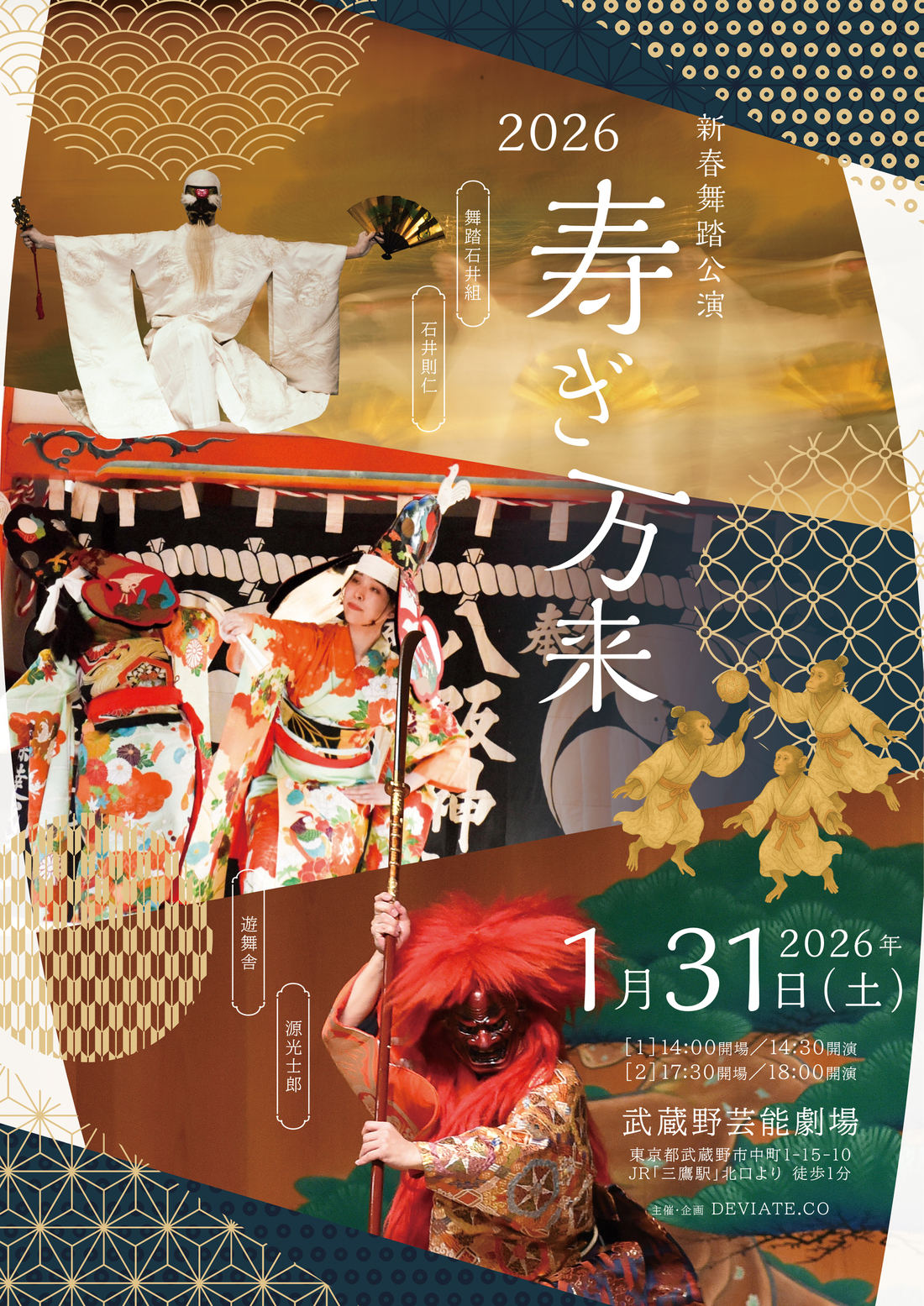
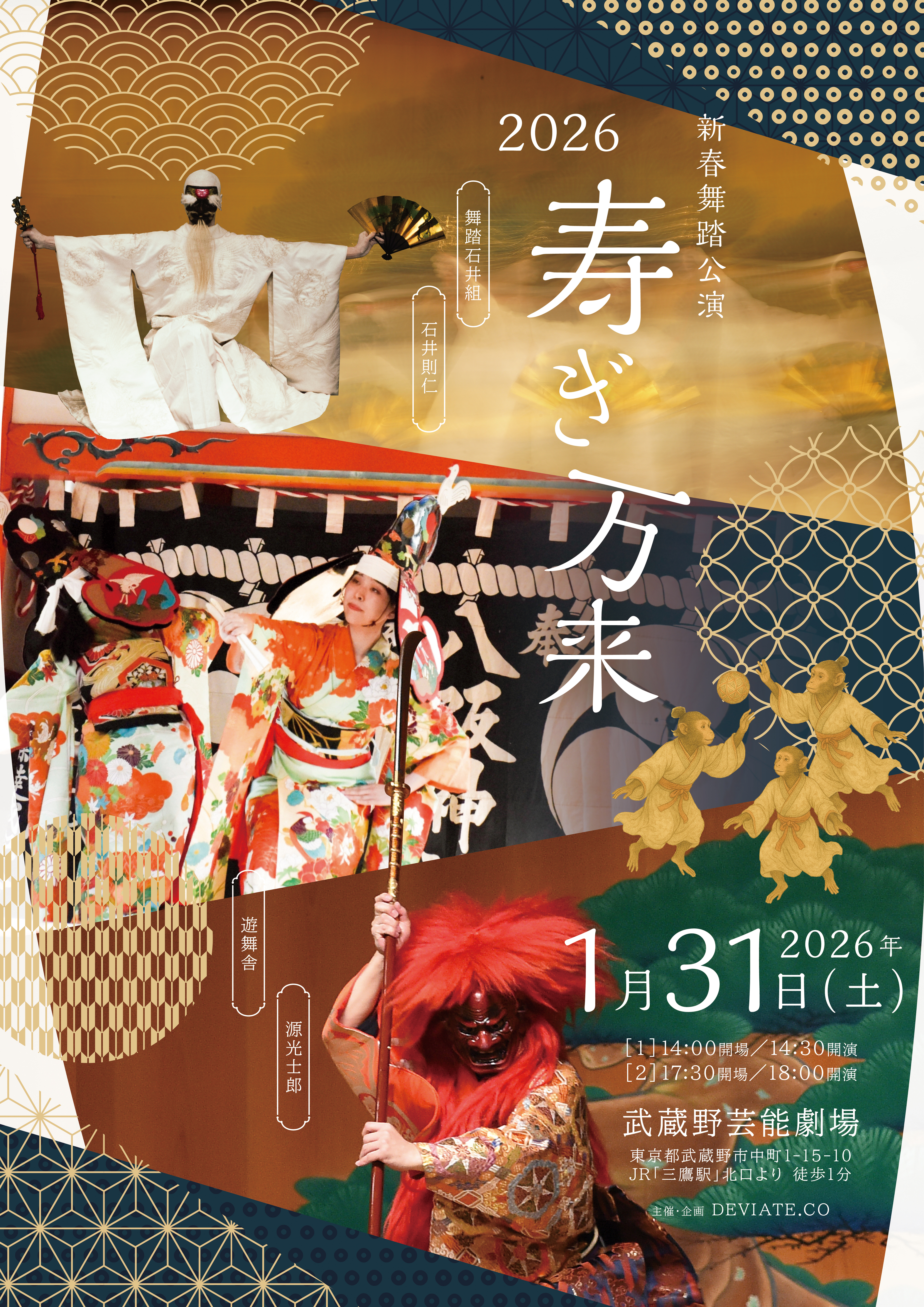
In 2026, Ishii Norito and the Butoh Ishii Gumi butoh company will celebrate your new year.
Our annual New Year dance returns!
Next year, we welcome new guests to deliver dances of prayer and blessing!
Don't miss it!
A Japanese Ritual Performance
to cleanse the old year
and welcome the new one.
90 minutes / No Japanese required
Safe for first-timers
Near Mitaka Station, Tokyo
▶ Buy Ticket
◾️Date & Time
Saturday, January 31, 2026
14:30 Start (Doors open at 14:00)
18:00 Start (Doors open at 17:30)
◾️Tickets
Advance/Day of: ¥5,000
◾️Venue
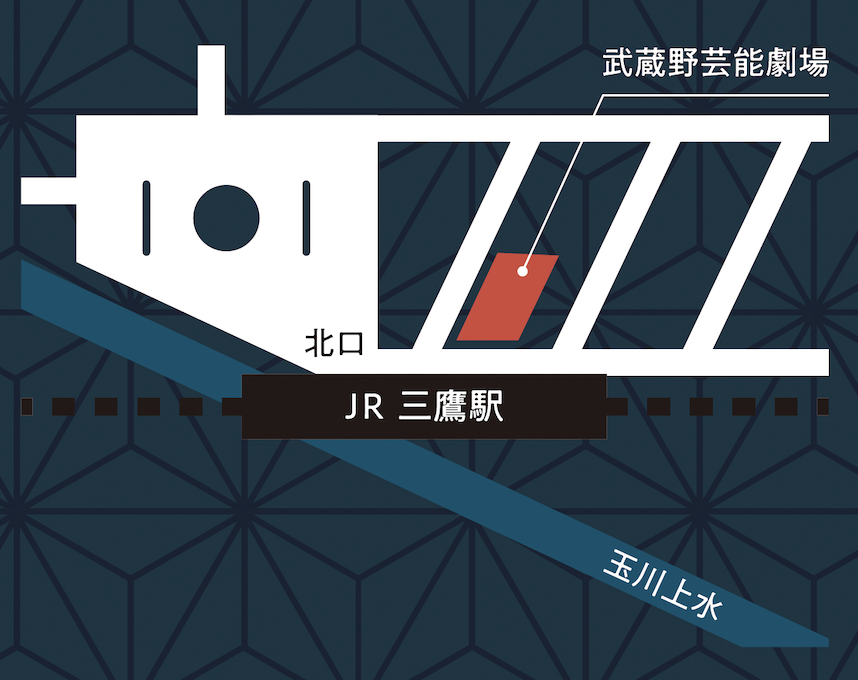
Musashino Performing Arts Theater
(1-15-10 Nakamachi, Musashino-shi, Tokyo 180-0006)
1-minute walk from JR Mitaka Station North Exit
Program
The Kemari Garden
Kemari Tamafuri
Kijin
Gyokō Naganakidori
Takasago
Tōtō Sanbasō
Cast
Mitsushiro Minamoto
Yūko Yūbusha
Keiko Yūbusha
Natsuki (Butoh Ishii Gumi)
Mitsuko Tamada
Manami
Soccer Boy
Norihito Ishii (Sankai Juku / Butoh Ishii Gumi)
Ticket Reservations & Inquiries
Click here or please mail to butohishiigumi@gmail.com

Staff
Lighting: Genta Iwamura
Sound: Akira Aikawa (Sound Weez Ltd.)
Music: Mu Tengzin, Tasuku Tsuji, Yutaro Matsunaga
Costumes: Coco*, Suzuko Yūbusha
Props: Koamido
Dramaturg: Suzuko Yūbusha
Stage Design: Kumagai Co., Ltd., Sizuko Yūbusha
Kemari Cooperation: Kan Miyazawa, Kemari Sensei (Ara Kōya)
Cooperation: Hachioji Kuruma Ningyō Nishikawa Koryūza, Hayachine-Takeryu Sotoyama Kagura Preservation Society
Flyer Design: Ayano Ogata
Production Cooperation: kitaya505, Makiko Kumagai, Butoh Ishii Gumi
Subsidized:Tokyo Metropolitan Foundation for History and Culture Arts Council Tokyo [Tokyo Live Stage Support Grant]

Organizer & Planning: DEVIATE.CO
Program
Garden of Kemari
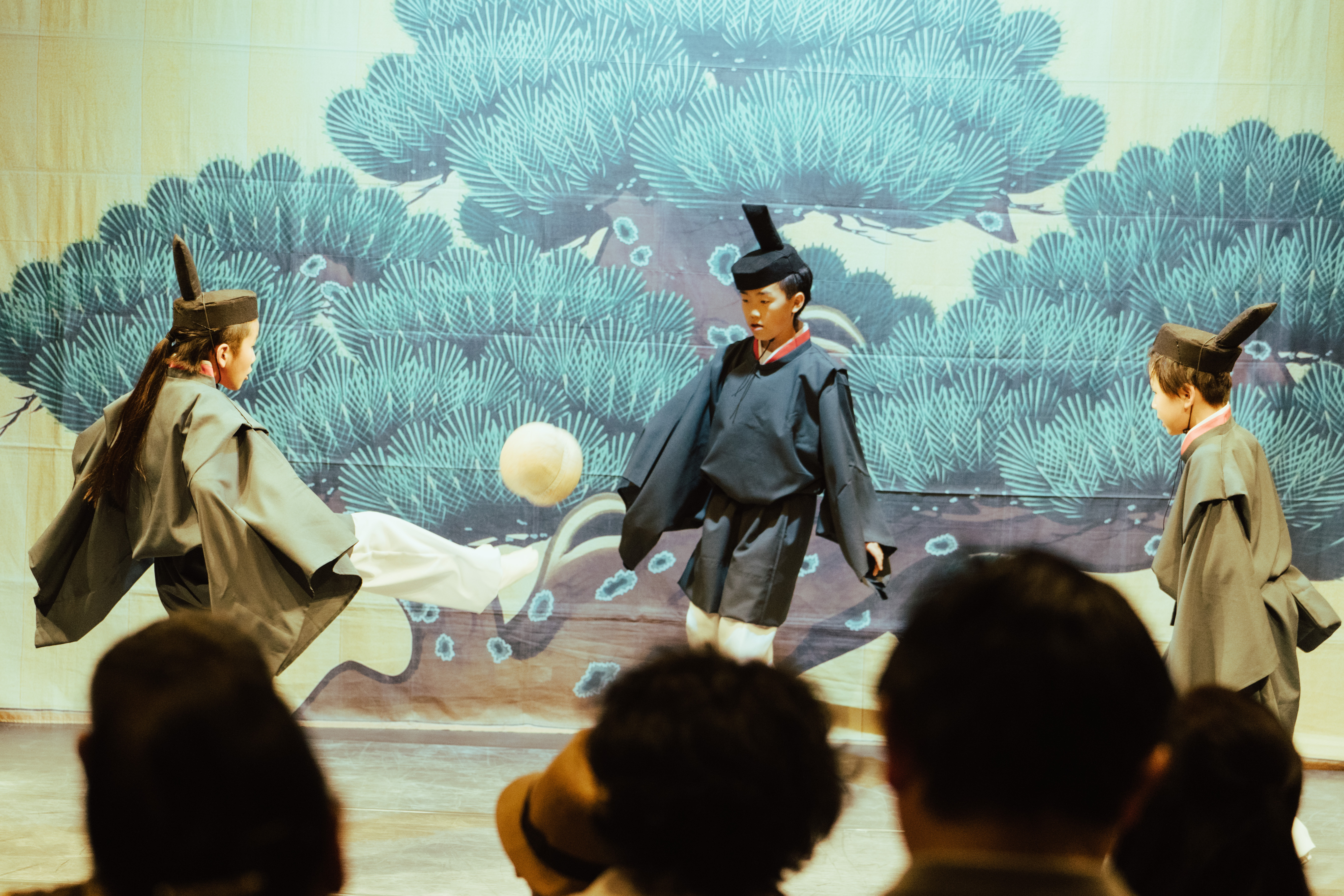
Kemari is an elegant game passed down in the imperial court since ancient Asuka and Heian periods. It is an art form where people form a circle and cooperate to continuously kick a ball without letting it fall, symbolizing harmony and blessing.
Its dancing trajectory was believed to connect heaven and earth, and each time the ball floated upward, the atmosphere of the place was thought to become purified.
Starting in 2025, young kickball prodigies will perform kemari as a pre-game ritual during spectator entry.
Performers
Higashine Youth Soccer Club
Costumes
Coco*
Kemari Instruction
Kan Miyazawa
Kemari Cooperation
Kemari Sensei (Ara Koya)
Kemari Boys
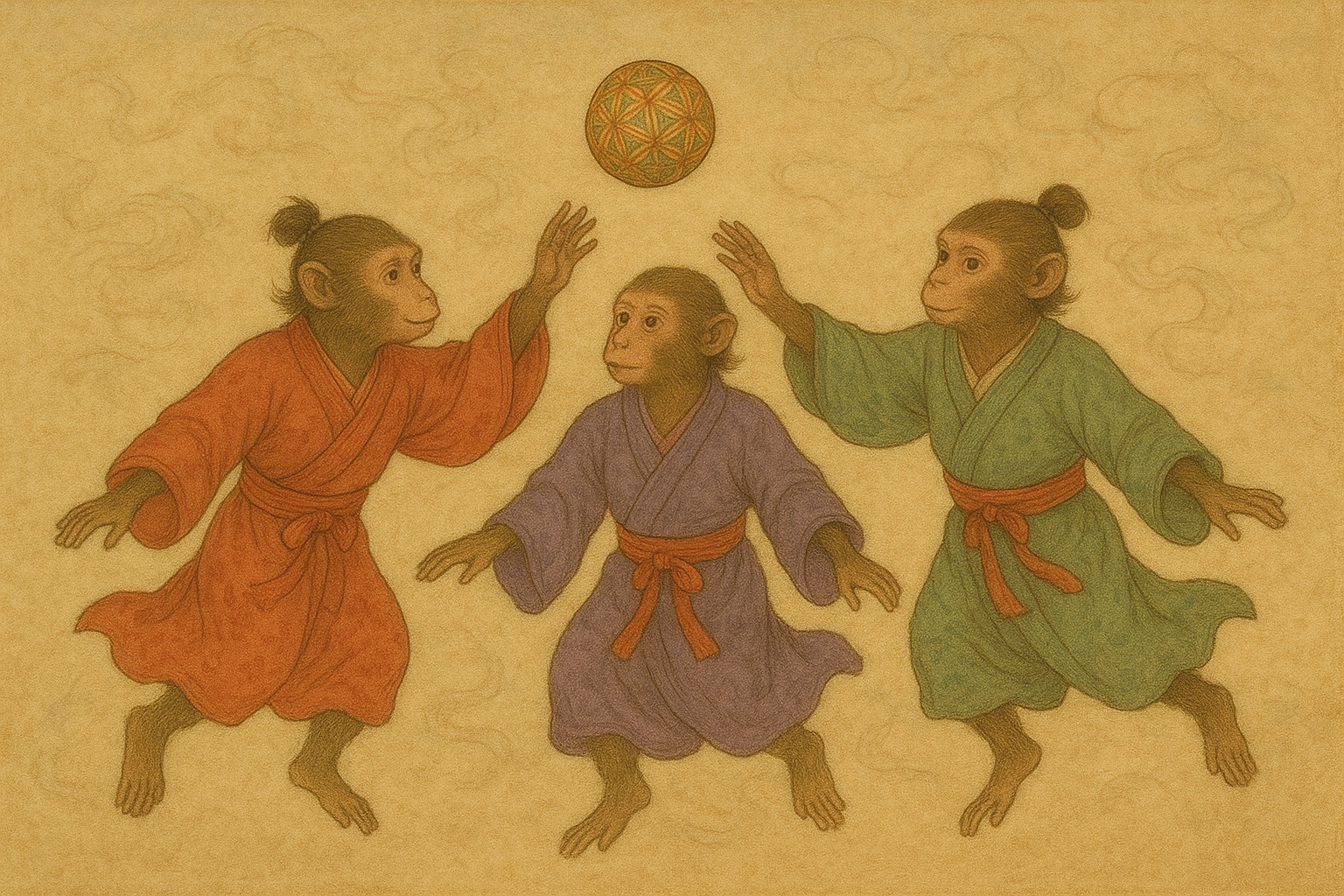
Over long ages, the pure, repeated movements of kemari gave birth to the “Spirit of Kemari.”
It is the spirit dwelling within the ball itself, taking form. Combining lightness and elegance, it appears, softly tracing circles like a ball dancing through the sky.
Gradually, the spirit begins to take on the aura of an “Okina” The Okina is an ancient symbol bringing blessings, longevity, and harmony, and the spirit's dance functions as a ritual manifesting this sacred power.
Each time the Spirit of Kemari repeats its circular movements, the invisible blessings of the Old Man pour down upon the space, guiding the stage towards celebration.
A presence as quiet and profound as the resonance of elegant instruments, yet radiating a fresh, auspicious energy—
That is kemari, and the “Spirit of Kemari” dwelling within it.
Supervised by
Norihito Ishii
Performed by
Natsuki (Butoh Ishii Gumi)・Mitsuko Tamada・Manami
Music
Mu Tengzin
Costumes
Coco*
Masks
Koamido
Creative Brain team
Takeshi Yamaguchi, Katsuya Kimishima (Butoh Ishii Gumi)
Kishin / Purification Ritual
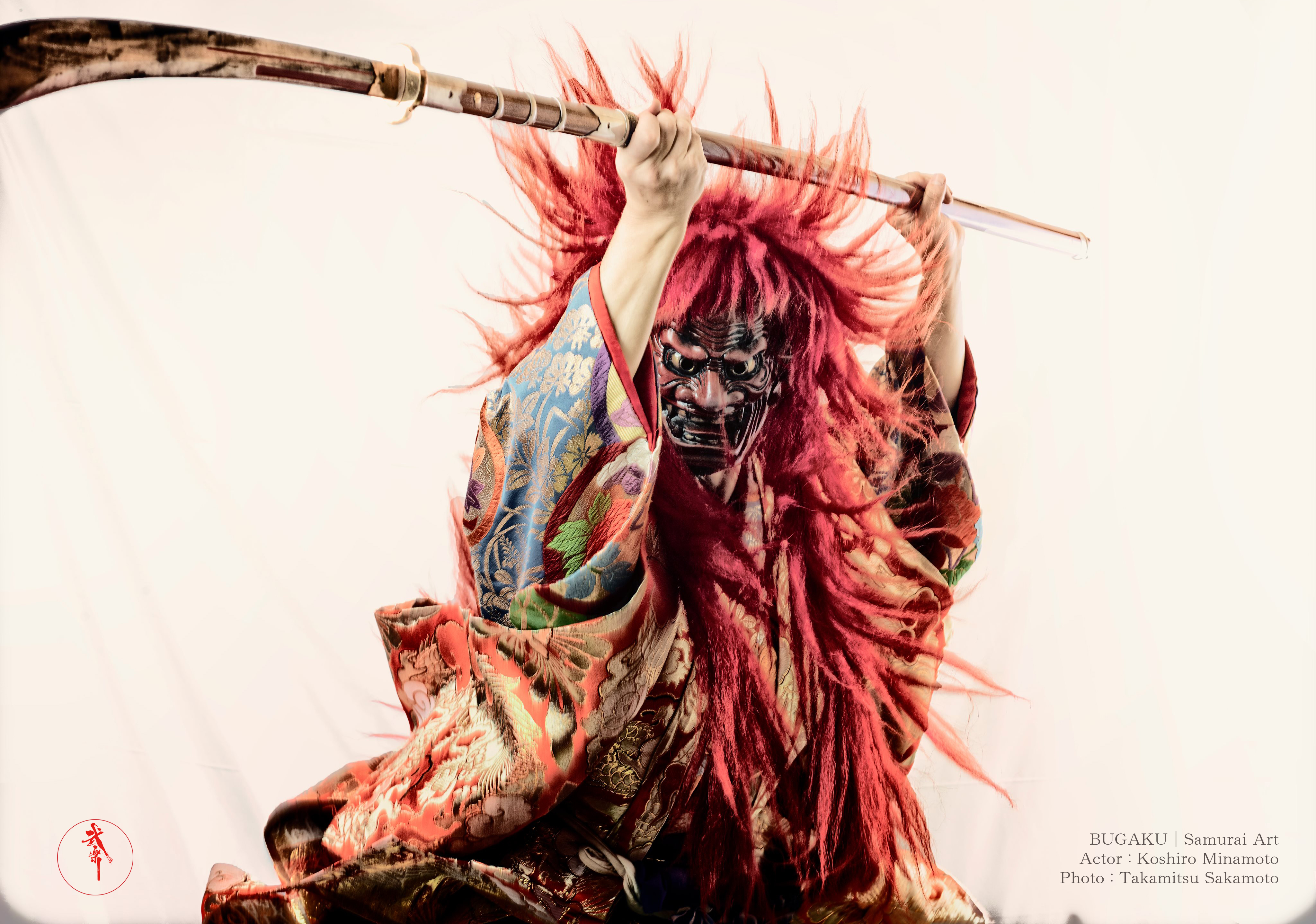
In ancient times, when outbreaks of mysterious plagues and famines made it difficult for young children to even survive past the age of three, these calamities were believed to be caused by invisible demons and evil entities.
Driven by the desperate wish to protect loved ones from these invisible, terrifying evils, people performed the “evil spirit exorcism” ritual to purify and ward off demons, praying for the health and safety of their families and cherished ones.
Since ancient times, red has been the color of life, possessing strong power. Bladed weapons like swords and knives, “shining objects,” have also been believed to hold a “special power to exorcise demons” since antiquity.
A crimson demon god purifies evil spirits with a great naginata.
Performed by
Koshiro MInamoto
Gyoko Naganakidori
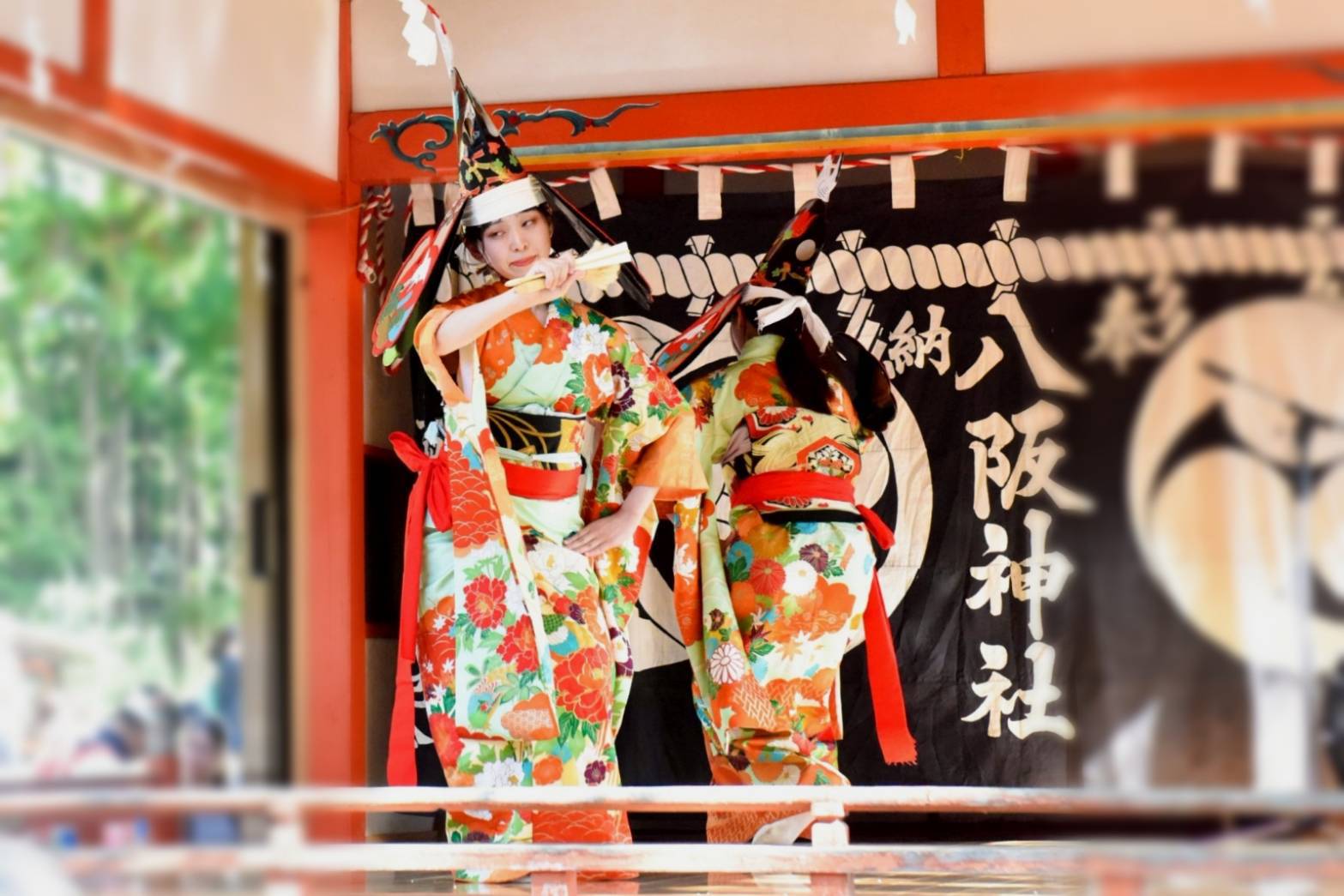
This work by Yubusha is a chicken dance inspired by the “Long-Crowing Bird of Eternity,” a being spoken of since ancient times as heralding dawn and bringing light back to the world.
In the Kojiki, the Eternal Long-Crowing Bird, together with the dance of Ame-no-Uzume, resounded with a loud cry that opened the Heavenly Rock Cave. Its voice, banishing darkness and calling forth light, has been imbued with symbolic significance as a purifier of the earth, existing at the origin of performing arts.
This work reinterprets cultural memories of the chicken as a physical act of stamping the earth and purifying the space.
With the cooperation of the Hayachine-dake School Toyama Kagura Preservation Society, this is an attempt to weave a dance piece by crossing the creativity inherent in kagura forms with contemporary physical expression.
Performers
Yubusha Yuko, Yubusha Keiko
Costumes, Art, Dramaturgy
Yubusha Suzuko
Supervision
Hayachine-Takeryu Sotoyama Kagura Preservation Society
Music
Yutaro Matsunaga
Takasago
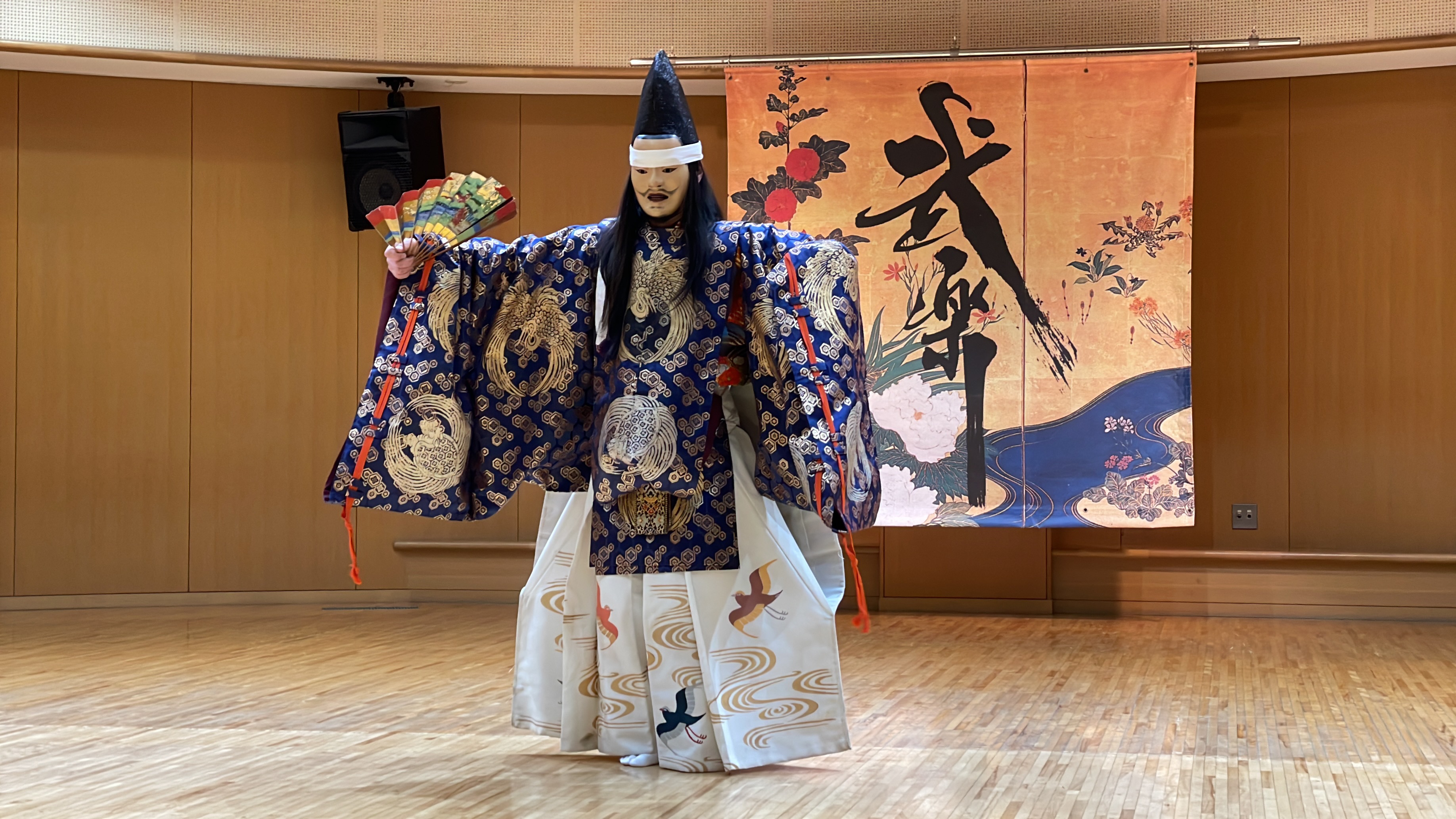
This highly auspicious performance celebrates marital love and longevity, honoring life through the pine trees of Aioi.
It is a staple piece for New Year gatherings, celebratory occasions, and wedding receptions.
Performed by
Koshiro MInamoto
Tohtoh Sanbaso
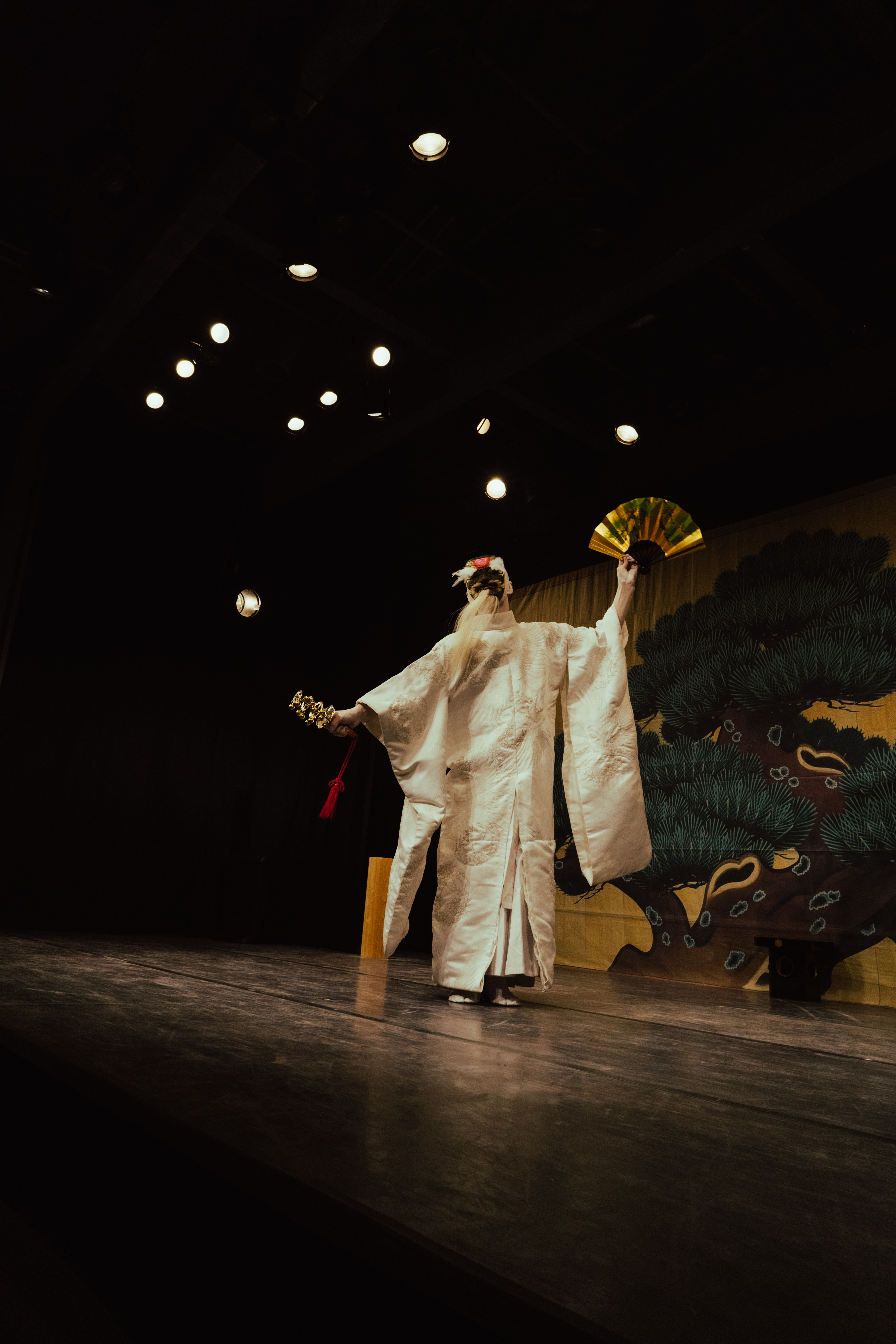
The Sanbasō is a traditional Japanese performing art that plays a crucial role as a celebratory dance praying for abundant harvests, longevity, and peace throughout the land.
It exists across multiple performing arts including Noh, Kyogen, Kabuki, and Bunraku, each with its own traditions, but its fundamental nature is that of a “sacred dance celebrating the New Year and festivals.”
The Momi (kneading) section features powerful foot stomps to compact the earth, praying for a bountiful harvest. It is characterized by an energy-filled dynamism.
The Bell Section involves holding bells in the hands, purifying the space with their clear ringing. The light dance is believed to summon good fortune.
Between the Momi and Bell Sections, the dance weaves in the celebration of life's breath.
Choreography, Performance, Costumes
Norihito Ishii
Music Director
Tasuku Tsuji
Masks
Koamido